
Trickster figures in fairytales and myths have always fascinated me with their ability to navigate and manipulate the boundaries of social norms and reality. They are the shape-shifters, the boundary-crossers, and the agents of chaos and change.
AI, in many ways, mirrors these characteristics, acting as a modern-day trickster technology.
In this post, I explore how AI embodies the traits of traditional tricksters and what this means for our engagement with reality. I draw on my PhD research, which actively engaged with trickster figures.

Cunning Shapeshifters
Shape-shifting and Fluid Identities
Tricksters often possess the ability to change their form or identity, allowing them to adapt to different situations and deceive those around them. This characteristic is evident in figures like Loki from Norse mythology and Anansi the Spider from African folklore. Similarly, AI technologies can take on various forms, from chatbots mimicking human conversation, to surveillance interfaces, to photo and video creation platforms, through to large data analysis systems.
This fluidity challenges our perception of reality and forces us to question the authenticity of what we see and hear. As my PhD thesis demonstrates, tricksters like Māui in Polynesian mythology exemplify this shape-shifting ability, which allows them to navigate different realities and fulfil various roles to disrupt rules and teach lessons that develop humans and their social systems. (Buxton, 2015).
Deception and Cunning
Tricksters are known for their cunning and deceptive tactics. They use their wit to outsmart others, often leading to humorous or ironic outcomes. For example, Coyote from Native American folklore is notorious for his clever tricks.
AI, with its ability to generate convincing fake content, operates similarly. AI can be used to create videos that show people doing things they never did, effectively blurring the line between reality and fiction.
And, often labelled hallucinations, AI deliberately feeds the user information to hide its inability to find the correct facts, quotes or references. Worryingly, it sometimes does this with clear intent to lie, as discussed in this recent article in Patterns.
The trickster’s ability to deceive is highlighted in numerous stories and could be considered a core trait of this type of being (Buxton, 2015).
Ambiguity and Paradox
Tricksters embody contradictions and paradoxes, operating in the grey areas of morality. They are neither good nor evil, making them unpredictable and intriguing. This ambiguity is also present in AI. While AI can be used for beneficial purposes like medical advancements and improved efficiencies, it can also be used for malicious activities like spreading medical misinformation.
This duality necessitates a careful and critical approach to engaging with AI.
Chaotic Transgressors
Boundary Crossers and Transgressors
Tricksters thrive on crossing boundaries and challenging norms. They exist at the edges of society and reveal the fluidity of these boundaries (gender, manners, rules, language, morality etc) actions.
AI, too, crosses traditional boundaries, disrupting industries and social norms. For instance, AI-driven automation is reshaping the job market, challenging the traditional notions of work and employment.
Hyde’s concept of “artus-work” describes tricksters as those who work at the joints of society, creating separation and placing boundary markers in new places (Hyde, Trickster Makes This World: Mischief, Myth, and Art, 1998).
In my research, I discuss how tricksters reveal the “hidden joints holding the old world together” and create new possibilities for engagement (Buxton, 2015). For me, AI holds this same role. Rapidly changing aspects of society – even how we perceive truth and reality.
Agents of Change and Chaos
Tricksters often act as catalysts for change. Their actions, whether intentional or not, lead to significant transformations. The Monkey King from Chinese literature is a prime example of a trickster whose chaos brings enlightenment. Tricksters’ role as agents of change is evident in how they rearticulate reality, disrupting the status quo to foster innovation (Buxton, 2015).
Similarly, AI disrupts the status quo, prompting new ways of thinking and doing. It provokes change by challenging existing systems and introducing innovative solutions – often through extreme disruption.


Humourous Boundary Dweller
Humour and Playfulness
Tricksters use humour and playfulness to reveal more profound truths about human nature and society. Puck from Shakespeare’s A Midsummer Night’s Dream exemplifies this trait through his mischievous actions. As my thesis notes, the humour and playful nature of tricksters allow them to transcend traditional boundaries and offer new perspectives on reality (Buxton, 2015).
AI can also support playfulness, as seen in AI-generated art and music, which push the boundaries of creativity and provoke thought about the nature of artistic expression.
Survivors and Outsiders
Tricksters often survive by their wits, living on the fringes of society – dwelling on the boundaries of societies. One foot in and out. This outsider status gives them a unique perspective. The trickster’s ability to survive and thrive on the edges of society is a testament to their adaptability and resilience (Buxton, 2015).
While not a traditional outsider, AI operates on the fringes of human capabilities, extending our potential and challenging our understanding of what machines can do. It is considered with fear, avoided, embraced with awe and can cause addictive obsession. All these boundary traits feel to me where AI sits currently in society presently.
Summary
These traits show that AI, like traditional tricksters, disrupts and reshapes our understanding of reality. This disruption compels us to critically examine the technology itself and the societal structures and norms it challenges.
Recognising AI as a modern-day trickster gives us a valuable framework for navigating its complexities. This perspective allows us to anticipate and mitigate potential risks while seizing opportunities for innovation and positive transformation.
Embracing AI’s trickster nature encourages us to remain vigilant, adaptable, and creative in our approach, ultimately enabling us to harness its transformative potential for the betterment of society particularly when engaging with complex issues like climate change.

References
Buxton, Maggie. Tricksters, Technology and Spirit: Practising Place in Aotearoa-New Zealand. PhD Thesis, Auckland University of Technology, 2015. Link
Hyde, Lewis. Trickster Makes This World: Mischief, Myth, and Art. New York: Farrar, Straus and Giroux, 1998.
Kelion, Leo. “Is AI Lying to Me? Scientists Warn of Growing Capacity for Deception.” The Guardian, May 10, 2024. Link
Park, Peter S., Simon Goldstein, Aidan O’Gara, Michael Chen, and Dan Hendrycks. “AI Deception: A Survey of Examples, Risks, and Potential Solutions.” Patterns 5 (2024): 100988. Link
IMAGES
Note:
All images were generated by Midjourney | Text created in collaboration with various AI interfaces as part of Strange Intelligences Lab research.
Build Your Resilience Now!
At AwhiWorld, we support you and your organisation (group or community) in adapting to and leveraging AI technology.
Through our coaching, mentoring, and development experiences (workshops, labs, installations, publications), we help you navigate the complexities of AI, fostering innovation and sustainable growth.
Help us create a future where cutting-edge research and technology drive meaningful transformation.
Related Posts

AI for Creatives Hastings Art Gallery
Our latest AI intervention, 'AI & Creatives', took place at Hastings Art Gallery on 20 February 2026. The 2-hour interactive seminar covered the AI landscape, how it can be used (including emerging…

Knowledge Sharing – AUT University
Our second knowledge sharing session for our Growing Material Cultures project took place on the 29th November in the School of Future Environments at AUT University. Professor Frances Joseph brought together several…
Knowledge Sharing – Geoff Wilson Gallery
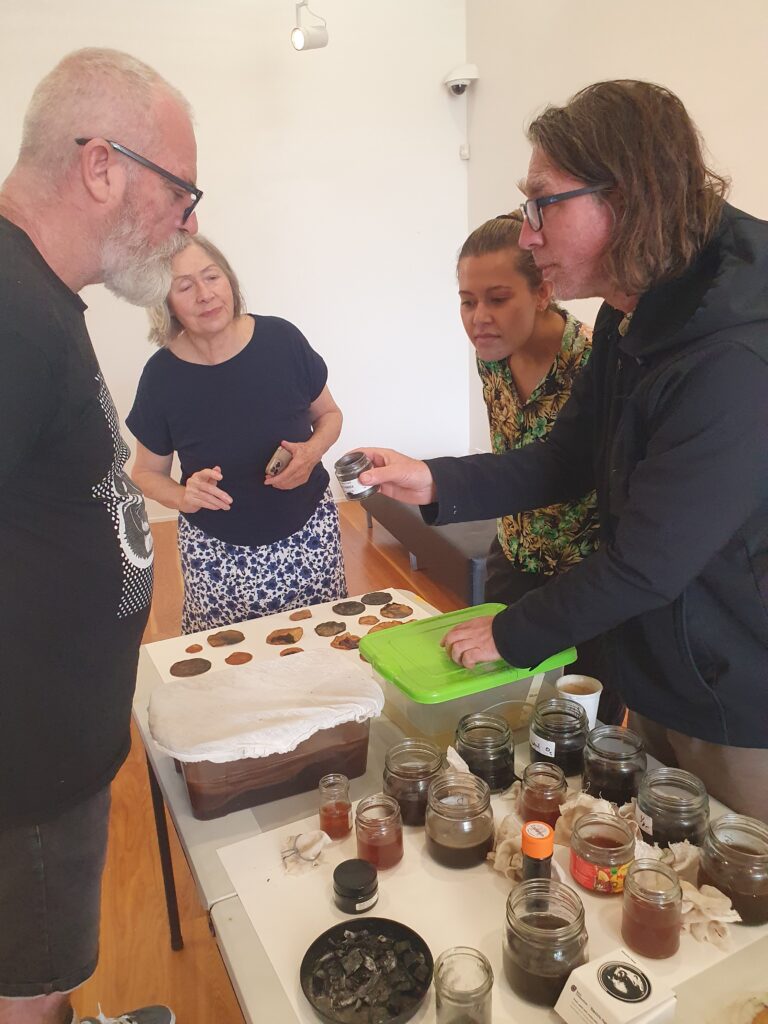
Sharing knowledge from experiments and kitchen based research was at the core of our session at Geoff Wilson Gallery on November 1st. Participants informally shared what they had been learning, their highs…

Interview with Kevin De Liban – Justice and The Algorithm
Interview with Kevin De Liban In this episode of Strange Intelligences, we speak with Kevin De Liban, a lifelong anti‑poverty advocate and founder of TechTonic Justice, about the hidden dangers of algorithmic decision…

Workshop Two: Growing Material Cultures
Strange new materials came to life in our hands today — from seaweed bioplastics to waterproofed biofilms. At Maunga Kura Toi, NorthTec, we held the second workshop in our Growing Material Cultures…

Notes from the Front Line
Strange Intelligences Creeping Strange Intelligence: Notes from the AI Frontline AI has slipped quietly into our creative lives, lurking in the background of almost every tool we use. It tidies our sentences,…

AI & What it Means to Be Human – Criticality and Resistance
AI and Multiple Realities We live in strange times. Reality is fragmented through social media channels into funnels of judgment, ego-driven humble bragging, or sponsored consumerism. Our lives, including our creativity, are…

AI Matariki
Matariki meets AI – Community-first innovation Today AwhiWorld had the privilege of spending Matariki Holiday at a powerful community gathering at the Whānau Focus Centre in Tūnatahi (Dargaville). We delivered a talk…

Workshop One: Growing Material Cultures
Workshop One in our Growing Material Cultures project was delivered at Maunga Kura Toi's studio in Raumanga and delivered by Professor Frances Joseph and Caudine Naselu. It covered how to grow Bacterial…

Fungi Hunting
Fungi Hunting - a super fun research expedition for the Growing Material Cultures project and part of the bigger AwhiWorld Strange Intellgences Lab project. Local expert and recent AwhiWorld interviewee, Caley McGillvery…